
Octoplay: A New Generation Slot Studio — Rapid Growth, Partnerships and Its Impact on Europe
In just a few years, Octoplay has moved from being a new entrant to becoming a recognised supplier in multiple regulated European markets. The studio’s growth story is not built on vague promises or hype, but on measurable milestones: licences in key jurisdictions, integrations with tier-one operators, and an expanding catalogue of games designed for modern player behaviour. As of 2026, Octoplay’s development strategy shows a clear direction — scale through regulation-first market entry, deepen distribution through operator alliances, and differentiate through fast production cycles and bespoke content builds.
How Octoplay Scaled So Quickly in Regulated Europe
Octoplay’s early expansion was driven by a practical approach: secure the licences that matter, then build operator relationships that unlock real distribution. By 2023, the company had obtained a UK Gambling Commission licence, which is widely treated as one of the strictest entry points for suppliers. That gave Octoplay access to one of Europe’s most mature online casino markets and provided a strong compliance signal to other jurisdictions.
From there, the studio’s European reach accelerated through approvals and market entries in several regulated regions. Among the more visible milestones were its Swedish supplier licence (also granted in 2023) and ongoing expansion across Southern and Eastern Europe. The pattern is consistent: Octoplay typically enters a market through licensing and then follows with a high-profile operator deal to establish credibility quickly.
What matters here is not just geographical coverage, but the type of markets chosen. Octoplay focused heavily on jurisdictions where regulation is stable, responsible gambling rules are enforced, and operators demand supplier-level compliance. This has helped the company avoid the volatility that often affects studios that chase short-term distribution in loosely governed territories.
Licensing Strategy and Why It Matters for Operators
For casino operators, working with a supplier is not only about game quality — it is also about risk management. A studio that holds licences in the UK and Sweden has already passed demanding checks on corporate structure, security practices, and operational integrity. In practical terms, this reduces onboarding friction for operators and helps speed up integrations.
Octoplay also strengthened its compliance profile with information security credentials, including ISO 27001 certification. In the modern European market, this is increasingly relevant because suppliers handle player-facing game delivery, data flows, reporting, and sometimes game logic audit trails. Operators want reassurance that partners treat security as an operational standard rather than an optional extra.
This regulatory-first model also influences product decisions. A supplier operating in the UK, Sweden, and other regulated markets must design games that can meet technical standards, auditing requirements, and responsible gaming expectations. That limits shortcuts — but it also raises the overall quality threshold and makes the studio more attractive to premium operators.
Partnerships That Shaped Octoplay’s European Footprint
Octoplay’s growth in Europe is closely tied to the pace and quality of its partnerships. Rather than focusing only on quantity, the studio repeatedly targeted recognised operator brands — a strategy that signals market confidence. Over 2024 and 2025, Octoplay announced and executed deals with major groups and high-traffic brands in the UK and across the Nordics, including William Hill and Svenska Spel Sport&Casino.
The Nordic region is particularly significant because it is one of Europe’s most regulation-driven environments, with strict licensing rules and strong expectations around transparency. Deals such as Danske Spil in Denmark reinforced Octoplay’s position not just as a new supplier, but as a studio capable of meeting the standards of government-linked or highly scrutinised operators.
Another important signal came from agreements involving larger multi-brand groups. Partnerships tied to operators that serve both the UK and Denmark demonstrate that Octoplay can scale across markets while keeping compliance and localisation under control. That is a difficult step for many studios, because each jurisdiction brings its own testing requirements, certification processes, and content restrictions.
Why Tier-One Deals Are a Shortcut to Trust
When a studio secures distribution with brands that already work with dozens of suppliers, it typically means the studio has proven its operational reliability. These operators have no incentive to add more content unless it performs commercially or fills a strategic gap. That is why partnerships with well-known European names carry weight beyond simple marketing value.
Tier-one operators also tend to demand technical readiness: stable game delivery, reliable reporting, quick incident response, and the ability to adapt content for multiple jurisdictions. For Octoplay, these deals suggest the studio is meeting technical expectations, not just providing visually appealing titles. Over time, this builds a track record that makes future integrations faster.
From a market perspective, these partnerships create a multiplier effect. Once a studio is active with major groups, it becomes easier to enter adjacent regions because the operator’s internal integration teams and compliance processes are already familiar with the supplier. This is one reason Octoplay’s expansion appears faster than what is typical for a young studio.
Octoplay’s Broader Impact on Europe’s Slot Supply Landscape
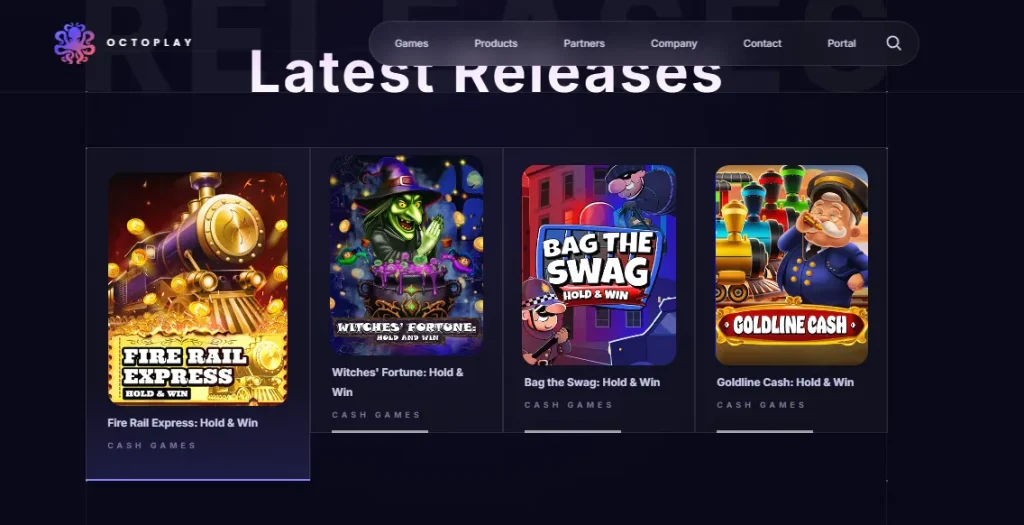
As of 2026, Octoplay represents a shift that many European operators have been moving toward: modern studios that can deliver new content quickly without compromising regulatory readiness. Traditionally, faster output was associated with studios that struggled in top-tier regulated markets. Octoplay’s trajectory suggests that speed and compliance can coexist if development, testing, and certification are built into production from the start.
The studio also contributes to an increasingly competitive environment for mid-tier suppliers. Operators are constantly balancing portfolios — legacy brands provide stability, while newer studios provide novelty and engagement. Octoplay’s presence forces competitors to match not only creative design, but also operational readiness in regulated markets.
Beyond competition, Octoplay’s expansion strengthens the diversity of content available to European players. Instead of the market being dominated by the same suppliers across every operator, studios like Octoplay broaden the selection and encourage more experimentation with themes, mechanics, and collaborative game development models.
What This Means for Players, Operators and the Future Market
For players, the benefit is straightforward: more variety and fresher releases across regulated casino brands. This matters because mature markets like the UK and Sweden have players who are already familiar with standard slot structures. Studios that release new mechanics and modern pacing can help operators retain attention without relying on aggressive promotions.
For operators, the rise of studios like Octoplay creates more leverage in portfolio planning. Instead of relying on a small circle of long-established suppliers, operators can diversify content sources while still staying within compliance frameworks. That can improve negotiating power, commercial flexibility, and the ability to tailor content offerings by market.
Looking ahead, the European market is likely to reward suppliers that combine regulation-first expansion with strong delivery pipelines. If Octoplay continues to scale partnerships while maintaining licensing coverage and security standards, it will remain relevant not as a “new name”, but as a long-term competitor in regulated Europe.