Imagine Live in 2026: How Localisation Supports Entry into the UK, Brazil and the Balkans
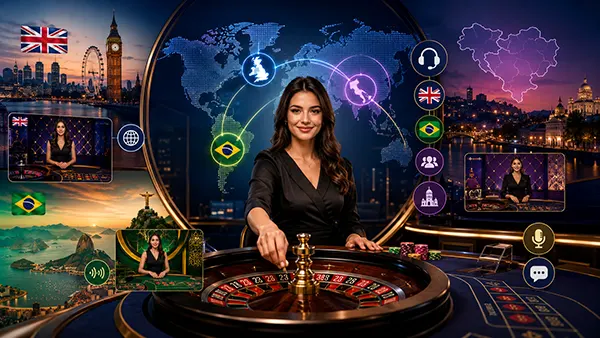
Imagine Live’s expansion in 2026 shows why live-casino localisation is no longer limited to translating buttons or changing a table name. The supplier is entering mature and newly regulated markets through a combination of local-language presentation, branded studios, jurisdiction-ready content and partnerships with operators that already understand their audiences. Its agreements with BetVictor in Great Britain, Ana Gaming and Novibet in Brazil, and MaxBet across the Balkans provide three useful examples of the same principle applied in different ways. In each case, localisation reduces the distance between an international live-dealer product and the expectations of local players, yet it does not replace licensing, certification or responsible-gambling controls. The strongest entry model combines all of these elements, allowing the games to look familiar, communicate clearly and operate within the rules of each market.
Why Localisation Has Become Part of Market Entry
Live casino depends on human communication more than most other forms of online gaming. A dealer explains the round, announces results, acknowledges players and sets the pace of the table. When that communication feels remote or difficult to follow, the game may be technically available but still fail to build a regular audience. Localisation addresses this gap by adapting spoken language, written instructions, table presentation and the general rhythm of the session. It can also include local currency displays, familiar terminology, suitable opening hours and game variants that already have recognition in the target country. These details matter because a live table is both a game and a broadcast. Players judge the clarity of the rules and the quality of the host at the same time.
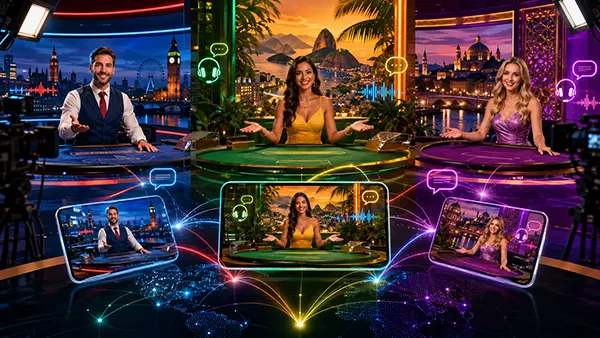
Imagine Live has built its current approach around scale combined with regional adaptation. The company states that it operates more than 200 tables, works in over 15 operating languages and has offices and studios across four countries. Its live content is streamed from studios in Armenia, Romania and Spain, giving the supplier several production bases rather than one central room serving every market in the same manner. This structure makes it easier to allocate native-speaking teams, create branded tables and schedule content for different time zones. It also gives operators a choice between a broad shared lobby and a more distinctive presentation linked to their own brand identity.
The commercial value of localisation should not be overstated as a promise of automatic growth. A native-speaking dealer cannot compensate for poor game selection, weak mobile performance or an operator that lacks local trust. What localisation can do is remove avoidable friction after the regulatory and technical work has been completed. It helps players understand the game without switching language, gives operators more control over how their casino section is presented and allows promotional activity to use content that genuinely matches the audience. In 2026, Imagine Live’s market entries suggest that localisation works best as an operating process: language, studio design, product choice, compliance and distribution are planned together rather than added in separate stages.
What Imagine Live Can Adapt for a Local Audience
The most visible layer is the dealer team. Native-speaking presenters can use natural expressions, pronounce local names correctly and respond in a way that feels less scripted than a translated international feed. Imagine Live already uses this model in products such as Brazilian Roulette and in partnerships that include native Brazilian Portuguese and Greek-speaking presenters. The benefit is practical as well as cultural. Rules and outcomes can be communicated without ambiguity, while the dealer can maintain the pace of play without repeatedly simplifying or translating instructions. For markets with firm language requirements, native presentation also reduces the operational risk created by incomplete dubbing or inconsistent text.
A second layer is visual ownership. Imagine Live offers branded tables and dedicated studio arrangements, allowing an operator’s colours, logos and design language to appear within the live broadcast. This is more substantial than placing a logo over a generic feed. A dedicated environment can align the table, background, on-screen graphics and presenter styling with the casino site that players already use. BetVictor’s 2026 agreement includes a fully branded dedicated studio and tables, while Imagine Live’s earlier Serbian work with King.rs used two blackjack tables and one roulette table tailored to local preferences. Such projects give operators a recognisable live-casino section without requiring them to build and manage a studio independently.
The third layer is the content mix. Localisation does not mean that every country needs an entirely different catalogue, because roulette and blackjack remain widely understood. It means deciding which shared games deserve the most prominent position and which variants need a local treatment. Brazilian Roulette uses native-speaking dealers while retaining the familiar rules of classic roulette. In other markets, local adaptation may focus on table limits, side bets, game-show presentation or the balance between shared and dedicated tables. Imagine Live’s wider catalogue includes classic table games, baccarat products, regional card games and original game shows, so operators can assemble a lobby that reflects actual demand rather than copying the same order of games into every country.
Different Localisation Priorities in Great Britain and Brazil
Great Britain is a mature remote-gambling market with established brands, experienced players and detailed technical standards. Market entry therefore requires more than an English-language feed. Players already have access to numerous live-dealer suppliers, so a new addition must fit an operator’s existing service and meet familiar expectations for clarity, stability and responsible design. The Gambling Commission requires licensed remote games to provide accessible rules and information before a player commits a stake. Its live-dealer standards also expect fair and independently auditable operations, trained croupiers, appropriate supervision, video surveillance and game records. These requirements make operational discipline part of the local product, even though most of it is not visible during a normal round.
Imagine Live’s agreement with BVGroup, announced on 29 May 2026, is a concrete example of its British strategy. BetVictor players received access to the supplier’s live table games and game shows, together with bespoke branded tables and a dedicated studio. The launch placed Imagine Live inside a long-established British gambling brand rather than presenting the supplier as a separate consumer-facing name. Digitain (MT) Limited, the licensed entity identified on Imagine Live’s site, holds active Gambling Commission permissions for remote casino game hosting and gambling software under account number 63601. This regulatory base, combined with BetVictor’s own operator responsibilities, supports a route into the market that connects licensed supply, recognised distribution and local branding.
British localisation is often understated compared with a brightly themed regional table. Clear British English, familiar terminology, sterling account information and concise rules may matter more than decorative references to national culture. Operators also need responsible-gambling messages and limit controls to sit naturally around the game, rather than appearing as an afterthought. For Imagine Live, the dedicated BetVictor environment is therefore important because it makes the supplier’s content feel like part of an existing British service. The provider retains its own game production, while the operator retains the tone and identity that its customers already recognise. This approach is particularly suitable in a market where trust is built through consistency and compliance rather than novelty alone.
Brazil Turns Language Adaptation into a Regulatory Requirement
Brazil presents a different situation because its federal regulated market is still relatively new. Since 1 January 2025, companies offering fixed-odds betting and permitted online games nationally have needed prior authorisation from the Secretariat of Prizes and Betting, and federally authorised brands use the .bet.br domain. Online games must be certified by an approved testing body and submitted through the government’s monitoring system before an authorised operator can offer them. For a live-casino supplier, this means that localisation cannot be separated from certification and operator approval. A Portuguese table may be culturally suitable, but it still needs to enter through an authorised business and satisfy the technical rules applied to online games and live studios.
The language requirement is especially direct. Brazil’s Ministry of Finance states that information in online games and communication with players in live studios must be provided in Brazilian Portuguese. The rule covers written, spoken and audiovisual communication, including the dealer. A temporary arrangement, extended through June 2027, allows some foreign-language studio feeds when dealer audio is muted or dubbed into Brazilian Portuguese, all rules and pay information are displayed in Portuguese, and interaction with the dealer is disabled. That transitional option may help during early integration, but a native Brazilian Portuguese table offers a much more complete experience and is better aligned with the final direction of the rules.
Imagine Live has already moved towards that model. Its Brazilian Roulette uses native-speaking dealers and retains the mechanics of classic roulette while adapting communication and cultural presentation for Brazilian players. In June 2026, Ana Gaming integrated Imagine Live content across 7K Bet, Cassino Bet and Vera Bet, including live-dealer games, game shows and dedicated tables. The same month, the supplier’s agreement with Novibet placed particular emphasis on native Brazilian Portuguese tables in Brazil. These deals show that Brazilian localisation operates on several levels at once: regulatory language, locally relevant presentation, certified content and distribution through authorised brands. Translation alone would address only one part of the entry process.
The Balkans Require a Country-by-Country Rollout
The Balkans are often discussed as one commercial region, but a live-casino supplier cannot treat the area as a single audience. Languages, operator brands, regulation and player habits differ between Montenegro, Serbia, Bosnia and Herzegovina, Greece, Romania and neighbouring markets. Imagine Live’s July 2026 agreement with MaxBet illustrates a staged response. The rollout began in Montenegro, with Serbia and Bosnia and Herzegovina scheduled to follow. This sequence creates room to test integration, table placement and player response in one country before repeating the launch elsewhere. It also allows local operator teams to adjust the game lobby and communications instead of applying one regional template to all three markets on the same day.
Imagine Live already had experience in Serbia before the MaxBet agreement. Its partnership with King.rs, announced in December 2024, introduced two blackjack tables and one roulette table with customised presentation intended for Serbian players. That smaller, clearly defined arrangement is useful because it shows how localisation can begin with a limited number of core games. Operators do not always need a large dedicated catalogue at launch. A focused selection can establish technical performance, dealer quality and audience demand before more tables are added. For a supplier, this also reduces the risk of producing local content that has not yet demonstrated regular traffic.
Regional production capacity supports this gradual approach. Imagine Live opened Romanian studios in January 2025 and now streams content from Romania alongside Armenia and Spain. Romania provides an operational base close to several Central and South-Eastern European markets, while the company’s 2026 Novibet agreement includes native Greek-speaking tables for Greece. Greece is a distinct regulated market, yet it offers another example of language-led adaptation within the wider Balkan area. Together, the Romanian studio, Serbian projects, Greek presentation and MaxBet rollout show that Imagine Live is building regional coverage through separate local routes rather than relying on a single English-language catalogue.
What Operators Can Learn from Imagine Live’s 2026 Expansion
The first lesson is that localisation should begin before launch, not after weak results appear. Operators need to decide which language will be spoken at the table, how rules will be displayed, which limits suit the audience, what hours need the strongest coverage and whether shared or dedicated tables are justified. They also need to confirm that each game, studio arrangement and supplier entity can be used under local rules. In Great Britain, that means working within Gambling Commission licensing and technical standards. In Brazil, it includes authorisation, game certification and Brazilian Portuguese communication. Across the Balkans, the staged MaxBet launch shows the value of handling each country as its own operating project.
The second lesson is to measure localisation with ordinary business data rather than broad claims about cultural connection. Useful indicators include table occupancy, repeat visits, average session length, mobile completion rates, peak-hour demand and the share of players choosing local-language tables over international alternatives. Operators can also compare shared tables with branded or dedicated ones, provided the comparison accounts for table limits and promotional placement. These figures help determine whether a native-speaking table deserves extended hours, whether a new game show is attracting sustainable interest and whether a dedicated studio produces enough value to justify its higher operating commitment.
The final lesson is that localisation is continuous. Language, regulation, operator branding and audience preferences can change after a table goes live. Brazil’s transitional rules for foreign-language studios are one clear reason to plan for future adjustment, while Great Britain’s technical standards and responsible-product requirements continue to evolve. In the Balkans, Imagine Live’s move from an individual Serbian partnership to a wider MaxBet rollout shows how local experience can support broader regional growth. By 2026, the supplier’s progress suggests a practical model: secure the right permissions, enter through trusted operators, adapt the live presentation to each audience and expand only after the local version works in real conditions.